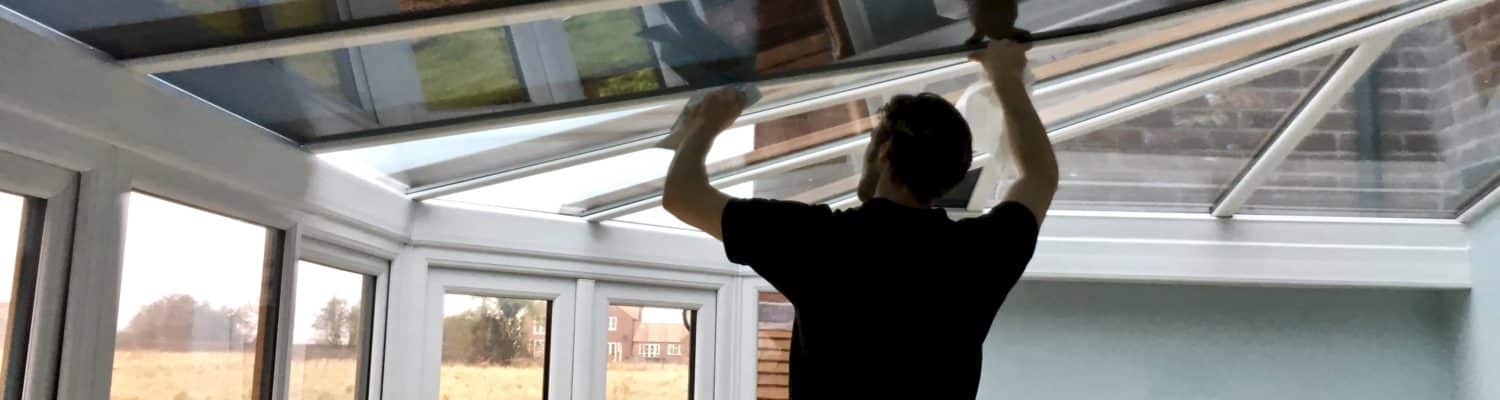

South-facing conservatories can be a double-edged sword. While they offer abundant natural light, the intense low winter sun can quickly turn a pleasant space into an uncomfortably glary one. This was precisely the issue a client was facing with their south-facing, uniquely shaped conservatory windows. The challenge wasn't just about reducing glare; it was about doing so safely and effectively, considering the complex physics of film-to-glass compatibility.
Understanding the Physics of Glare Reduction
To combat severe glare, a significant reduction in visible light is necessary. Physics dictates that at least 95% of visible light must be blocked to make a noticeable difference. To put this into perspective, imagine the tint on a limousine window – it's that dark. Even with such a dark film, looking directly at the sun is still not advisable without multiple layers of protection.
The Crucial Role of Glass Type and Thermal Stress
When any film is applied to glass, it alters how the glass absorbs infrared light, which is directly related to heat. This is where glass compatibility becomes paramount. Different types of glass have varying tolerances to thermal stress – the temperature difference across the pane.
- Toughened and Strengthened Glass: These types of safety glass can withstand significant temperature differences (100-350°C) before risking breakage.
- Annealed (Float) Glass: This non-safety glass is far more sensitive. A temperature difference of just 40°C across the pane can lead to thermal stress and potential breakage. This risk is even higher with irregularly shaped glass, such as the triangular windows in the client's conservatory.
The Complication of Low E Coatings
Adding Low Emissivity (Low E) coatings to the mix further complicates matters. These coatings are designed to reflect heat back into the room during winter. However, when an internally fitted solar control film (which aims to reflect heat out of the room) is applied, it creates a conflict. The inner pane of glass can become excessively hot, exacerbating thermal stress issues. The darker the film, the more heat it absorbs, even if it’s highly reflective.
The Safest Solution: External Application
In the case of the client's conservatory, the presence of annealed glass with a Low E coating, coupled with the irregularly shaped windows, presented a significant risk for internal film application. An external film application was specified because:
- Reduced Thermal Risk: External films experience less direct solar energy absorption, as the glass essentially "thinks" it's a cloudy day. This significantly reduces the thermal stress on the glass, making breakage less likely.
- Effective Glare Reduction: A 95% light-blocking external film effectively addresses the client's primary complaint of blinding low winter sun.
Why Internal Films Can Be Risky
While clients might prefer internal films for aesthetic or practical reasons, specifying them without a thorough understanding of glass type and thermal stress can be dangerous. Competitor companies who recommended internal films may have either:
- Failed to assess the glass type correctly.
- Lacked awareness of the potential thermal stresses involved.
- Specified a film that, while safe, wouldn't adequately address the glare issue.
It's crucial to understand that while a medium-tinted internal film might be safe for the glass, it would likely not meet the required glare reduction standards. Many companies, particularly those transitioning from automotive tinting, may not have adequate training in the nuances of architectural window film and its interaction with different glass types.
Conclusion Summary
When selecting window films, especially for conservatories with unique glass types or shapes, a thorough understanding of film-to-glass compatibility and thermal stress is non-negotiable. Prioritizing the client's safety and the longevity of their windows is paramount. In this scenario, an externally applied 95% light-blocking film was the only safe and effective solution to mitigate glare on the annealed, Low E coated, shaped glass. It’s a clear reminder that sometimes, what a client prefers must be balanced with what is technically feasible and safe.